


July 18, 2026 / ProSchmoStaff
Sharp or Not: Decoding the Sportsbook’s Architecture at UFC Abu Dhabi
When tracking fight-week odds, line movement rarely reflects pure luck or standard consensus. What begins as early recreational speculation evolves into sharp positioning, culminating in a clear closing board. By cross-referencing public retail books against the sharpest market-making sportsbook in the world—where higher limits and syndicate action reveal true intent—we can strip away the noise and uncover where the real smart money landed.
Here is the final synthesis of the entire week, explaining how sportsbooks designed this card to balance risk, tax public parlays, and absorb professional flow.
1. The Biggest Discrepancies: Public Traps vs. Pure Sharp Action
By comparing retail ticket counts against money flows at the premier sharp book, several major storylines stand out immediately:
-
Saygid Izagakhmaev (+195)
-
Abubakar Vagaev (-225)
The Verdict: It appears Vagaev was an inflated favorite built for recreational parlay anchoring. The sharpest bettors on the planet loaded up heavily on Izagakhmaev at plus-money.
The Story: Early in the week, casuals swarmed Vagaev (-250). However, at the sharp book, pros hammered Izagakhmaev to the tune of 93% of the handle on 80% of tickets.
Sharp Book Stats: 93% Money / 80% Bets on Izagakhmaev (+195)
-
Wellington Turman (+750)
-
Islam Dulatov (-1150)
Sharp Book Stats: 100% Money / 88% Bets on Turman (+750)
The Story: While retail books saw massive ticket volume on Dulatov, the sharp book recorded a staggering 100% of money and 88% of tickets on Wellington Turman (+750). Dulatov literally held 0% of the handle at the market-making book.
The Verdict: Retail books inflated Dulatov to -1150 to tax public parlays. Meanwhile, syndicate money stepped in exclusively on Turman, treating the +750 price tag as a mathematically necessary longshot position.
-
Brendson Ribeiro (+700)
-
Magomed Tuchalov (-1050)
Sharp Book Stats: 71% Money / 67% Bets on Ribeiro (+700)
The Story: Tuchalov absorbed huge public parlay volume across retail books all week. At the sharp house, however, 71% of total handle hit Ribeiro at +700.
The Verdict: Tuchalov’s price tag was heavily pumped by casual parlay steam. Sharps took advantage by nibbling the massive +700 underdog, forcing books to balance extreme public liability with heavy sharp payout risk.
-
Steve Erceg (-110)
-
Ramazan Temirov (-110)
Sharp Book Stats: 65% Money / 50% Bets on Erceg (-110)
The Story: A pure pick 'em on the board, but 65% of the dollars landed on Erceg despite tickets being split dead down the middle (50/50).
2. Sharp Favorites vs. Public Favorites: Where Consensus Met
Not every favorite was a trap. In several fights, sharp syndicate money matched retail public volume, driving lines higher through genuine cross-market consensus:
-
Nurullo Aliev (-240): Retail books saw steady Aliev action (66%), but at the sharp venue, Aliev commanded an astonishing 94% of total handle on 41% of tickets. This confirms that line movement from -180 on Day 1 to -240 on fight day was driven by legitimate professional backing.
-
Axel Sola (-200): Holding 96% of sharp handle on 50% of tickets, Sola was one of the highest-confidence favorite plays on the entire board for pro bettors.
-
Sam Patterson (-535): Patterson pulled in near-unanimous money (99% sharp handle on 70% of tickets), showing that sharps were more than willing to lay heavy juice when they identified a clear skill mismatch.
-
Valter Walker (-185): Walker secured 86% of sharp handle on 71% of tickets, matching high retail demand and forcing oddsmakers to hold firm on his heavy favorite price.
3. The Flip: Where Sharp Books Diverged from Retail Trends
In a few notable spots, the market-making book told a completely different story than general retail sportsbooks:
-
Dustin Jacoby (-190)
-
Muhammad Said (+165)
Retail Trend: Mid-week tracking showed early sharp hints on Said (+145), commanding up to 89% of money on retail splits.
Sharp Book Reality: When higher-limit professional money came in, it flipped back to the favorite. Jacoby secured 97% of the handle on 64% of tickets at the sharp book, proving that true high-limit bettors backed the favorite while smaller retail sharps nibbled the dog.
-
Magomed Ankalaev (-550)
-
Bogdan Guskov (+425)
Retail Trend: Earlier in the week (when Khalil Rountree was scheduled), massive money sat on the underdog side.
Sharp Book Reality: Against Guskov, Ankalaev drew 54% of money alongside 100% of the total round prop handle (Over 2.5 rounds drew 100% of handle). Sharp money respected Ankalaev’s path to a controlled, decision victory.
4. The Pick 'Em Battle: Steve Erceg vs. Ramazan Temirov
In a pure pick 'em matchup (-110 / -110), retail sportsbooks showed higher public ticket volume on Temirov.
However, at the sharp venue:
-
Steve Erceg (-110): Captured 65% of the total handle on a dead-even 50% ticket split.
-
Over 2.5 Rounds (-110): Commanded 100% of total handle and tickets.
It appears smart money respected Erceg’s championship-level experience and expected a long, tactical battle going past the 2.5-round mark.
The Master Blueprint: How the House Built This Slate
When you step back and look at both retail books and the market-making sharp sportsbook, the bookmaker’s architecture becomes crystal clear:
-
Taxing Public Parlays: Books pushed fighters like Dulatov (-1150) and Tuchalov (-1050) into astronomical odds territories. They knew casual bettors would anchor their parlays to these heavy favorites regardless of the price, allowing books to severely cut their payout liability.
-
Sharp Underdog Offsets: By accepting massive, high-dollar single wagers on live underdogs like Izagakhmaev (+195), Turman (+750), and Ribeiro (+700), the house built a natural defense mechanism. If just one or two of these underdogs land, thousands of public parlay tickets blow up instantly, securing high hold for the house while paying off sharp single bets.
-
Consensus Locks: On true blue-chip favorites like Nurullo Aliev and Axel Sola, oddsmakers adjusted lines quickly to force both public and sharp bettors to pay a heavy premium to buy in.
Whether the public parlays hit or the sharp dogs bark, the structural design of line movement, vig, and risk balancing guarantees that over the long run, the house maintains its ultimate edge.

July 18, 2026 / ProSchmoStaff
Sharp or Not: The Real Story Behind the Lines
Welcome to the ultimate edition of "Sharp or Not."
For the uninitiated, SHARPs are renowned for betting with the highest limits and the sharpest action sportsbooks in the world. While retail books reflect a chaotic blend of casual parlay builders and emotional fans, books such as Pinnacle and Circa is where professional syndicates draw their real battle lines.
By comparing our Day 1 baseline, the Day 4 retail narrative shifts, and data from the sharpest books on earth, we can peel back the curtain completely.
Suddenly, it appears that the early-week movement has taken a sudden turn!
The Feature Shifts: Retail Myth vs. Sharp-Book Reality
1. Stewart Nicoll (+725) vs. Alden Coria (-1100)
Day 1:
Nicoll +650
(70% Handle / 32% Bets)
Day 4:
Nicoll +700
(66% Handle / 16% Bets)
Coria -1100
(34% Handle / 84% Bets)
Saturday Final:
Nicoll +725
(0% Handle / 40% Bets)
Coria -1100
(100% Handle / 60% Bets)
The Market Reality: The early reports made it seem like the smart bettors were testing the waters on a huge underdog because they thought they found a hidden advantage. They assumed the odds moving to +700 was a "trap" set by the casino to trick people into betting the wrong way.
Today's actual data completely exposes this theory as a retail illusion. At the sharpest books in the world, Stewart Nicoll has 0% of the money handle despite accounting for 40% of the ticket count. Meanwhile, Alden Coria holds 100% of the money handle on 60% of the tickets at a massive -1100 premium. It appears the professionals never considered Nicoll a live dog. The early "sharp money" seen on retail books was simply low-volume noise. Real syndicates stepped up to the counter at the sharpest books and confidently laid the heavy price on Coria, treating him as a bulletproof anchor.
2. Levi Rodrigues Jr. (-150) vs. Felipe Franco (+130)
Day 1:
Rodrigues -175
(99% Handle / 36% Bets)
Day 4:
Rodrigues -155
(47% Handle / 32% Bets)
Franco +130
(53% Handle / 68% Bets)
Saturday Final:
Rodrigues -150
(9% Handle / 50% Bets)
Franco +130
(91% Handle / 50% Bets)
The Market Reality: On Thursday, it seemed like the market had neutralized and balanced out after early Rodrigues money. The blogger assumed the house dropped the line to invite buyback on the favorite.
Sharp books tell a radically different story. This isn't a balanced market; it is a massive, coordinated sharp attack on the underdog.
Felipe Franco has a massive 91% of all the money bet on this fight, even though the total number of bet tickets is split 50/50 between both fighters. Meanwhile, Rodrigues only has 9% of the money. It looks like the pro bettors realized Rodrigues was way overvalued when the casino first set his odds at -175. The pros didn't just fix a bad line; they kept pounding bets on Franco all week long. With Franco sitting at +130 odds, the real experts are completely on his side.
3. Austin Bashi (-137) vs. Jose Delgado (+117)
Day 1:
Bashi -102 (82% Handle / 29% Bets)
Day 4:
Bashi -102 (71% Handle / 30% Bets)
Delgado -118 (29% Handle / 70% Bets)
Saturday Final:
Bashi -137 (75% Handle / 73% Bets)
Delgado +117 (25% Handle / 27% Bets)
The Market Reality: The mid-week report claimed this was a "classic split pick'em" where the house was letting the public drive Delgado to the favorite role while giving sharps a cheap price on Bashi.
Sharp book reality proves that the early-week public hype on Delgado was completely steamrolled by professional respect for Bashi. Bashi is not a cheap underdog; he has steamed out to a commanding -137 favorite, backed by 75% of the money handle and 73% of the tickets. The professionals completely dictated this line, forcing the house to push Delgado to a +117 underdog.
The sharp stance here is completely aligned with the market movement: Bashi is the definitive side. At least, according to the big money. But is it possible the pros are wrong?
The Main Event: Dricus Du Plessis vs. Kamaru Usman
Day 1:
Balanced 51% / 49% Handle Split
Day 4 (Retail):
Du Plessis -238 (45% Handle) vs. Usman +195 (55% Handle)
Saturday Final:
Du Plessis -220 (98% Handle / 40% Bets)
Usman +190 (2% Handle / 60% Bets)
The Market Reality: This is the ultimate plot twist of the entire card. Retail books across the country reported that "sharps" were taking Usman mid-week at +195, while the casual public was building tickets on Du Plessis.
SHARP sportsbooks' high-limit data blows that narrative entirely out of the water. At the sharpest books in the world, the ticket count actually favors Usman (60%), meaning casual or mid-tier bettors are chasing the narrative of the former champion at a plus-money price. Meanwhile, an astronomical 98% of the raw financial handle is sitting on Dricus Du Plessis at -220 on just 40% of the tickets.
It appears that the massive, market-moving syndicates are completely unified. They are not looking for a nostalgic underdog story; they looked at the elite pressure metrics of the reigning champion and laid massive, high-limit wagers on Du Plessis. The retail books were flooded with small-scale Usman bets that skewed their percentages, but where the millions are actually being risked, Du Plessis is the definitive sharp stance.
The Co-Main Event & Under-the-Radar Sharp Targets
Anna Melisano (+500) vs. Dione Barbosa (-670)
Saturday Final:
Melisano +500 (99% Handle / 75% Bets)
Barbosa -670 (1% Handle / 25% Bets)
The Market Reality: Retail books have Barbosa pinned as a massive, public parlay piece. But over at SHARP books, a fascinating anomaly has formed: Anna Melisano is commanding 99% of the money handle and 75% of the tickets at a massive +500 price tag. It appears that the sharpest high-stakes players at Circa have identified a massive math flaw or a tactical edge in Barbosa's price, turning a supposed "lock favorite" into a high-leverage luxury target for an upset. Will this happen? After all, we've determined that either Barbosa wins by submission or Melisano wins outright.
Fatima Kline (-450) vs. Tabatha Ricci (+360)
Saturday Final:
Kline -450 (100% Handle / 100% Bets)
Ricci +360 (0% Handle / 0% Bets)
The Market Reality: While the short-notice opponent change caused chaos earlier in the week, SHARP books show absolute, clinical finality. Fatima Kline holds a pristine 100% of the handle and 100% of the bets at -450.
Absolutely no one in the professional space is willing to throw money at Ricci on short notice. The line has completely frozen because the sharp consensus is absolute: Kline is a certainty. Accordingly.
Final Verdict: The "Sharp or Not" Blueprint
Now that we have definitive data, we can ignore the schizophrenic day-to-day guesses of the retail market. Tonight's card wasn't designed to trap the pros; the pros simply waited for the retail public to inflate the prices of specific fighters before stepping in with maximum volume.
If you want to follow the real money tonight, the blueprint is clear:
-
The True Favorites: The real cash is backing Dricus Du Plessis (-220) and Austin Bashi (-137)(high variance). The public's affection for underdogs like Usman and Delgado has given us cleaner, sharper prices on the superior tactical fighters.
-
The Calculated Live Dog: Felipe Franco (+130) is the ultimate sharp target on the undercard. Pushing a 91% money handle proves that syndicates view him as the mathematically correct side.
-
The Ultra-Longshot Flyer: If you are hunting for a massive lottery ticket, Anna Melisano (+500) has captured the backing of high-limit risk takers who see massive vulnerability in Barbosa.
The public bets narratives; SHARPs bets edges.
Let's make some money.

July 11, 2026 / ProSchmoStaff
Sharp or Not: Inside the Psychological Matrix of UFC 329
To the untrained eye, sports betting is a game of predicting athletic outcomes. To the bookmaker, however, it is a highly sophisticated tax on human bias, cognitive dissonance, and narrative hype.
By tracking the evolution of the UFC 329 betting market from Day 1 (Monday) to Day 4 (Thursday) and finally to Saturday (Fight Day)—comparing the public-facing betting splits against a highly guarded, private ledger of Sharp-Only syndicates—the curtain is pulled back.
It appears the oddsmakers who designed this card had very specific intentions: to exploit public nostalgia, shield themselves from massive professional syndicates, and let the mathematics of the house balance out their liabilities. Ultimately, it appears the house did not set these lines to predict who would win, but to engineer a scenario where, regardless of the blood spilled in the Octagon, the casino would sweep the board.
1. The True Narrative: Public vs. Sharp Positions
Max Holloway (Saturday Odds: -298)
Main Handle (Public Cash): 8%
Main Bets (Ticket Count): 34%
Sharp-Only Handle (Actual Pros): 82%
Sharp-Only Bets (Pro Tickets): 36%
The True Narrative: Verified Sharp Hammer on the Favorite.
Conor McGregor (Saturday Odds: +240)
Main Handle (Public Cash): 92%
Main Bets (Ticket Count): 66%
Sharp-Only Handle (Actual Pros): 18%
Sharp-Only Bets (Pro Tickets): 64%
The True Narrative: Pure Public Nostalgia Trap.
Robert Whittaker (Saturday Odds: -135)
Main Handle (Public Cash): 80%
Main Bets (Ticket Count): 78%
Sharp-Only Handle (Actual Pros): 2%
Sharp-Only Bets (Pro Tickets): 36%
The True Narrative: The "VIP/High-Roller" Illusion.
Cody Garbrandt (Saturday Odds: +310)
Main Handle (Public Cash): 83%
Main Bets (Ticket Count): 30%
Sharp-Only Handle (Actual Pros): 100%
Sharp-Only Bets (Pro Tickets): 89%
The True Narrative: Max-Conviction Sharp Stance.
Elisha Ellison (Saturday Odds: +800)
Main Handle (Public Cash): 96%
Main Bets (Ticket Count): 20%
Sharp-Only Handle (Actual Pros): 94%
Sharp-Only Bets (Pro Tickets): 90%
The True Narrative: The Deflated Decoy.
Gable Steveson (Saturday Odds: -1350)
Main Handle (Public Cash): 4%
Main Bets (Ticket Count): 80%
Sharp-Only Handle (Actual Pros): 6%
Sharp-Only Bets (Pro Tickets): 10%
The True Narrative: The Public Parlay Anchor.
Luke Riley (Saturday Odds: -225)
Main Handle (Public Cash): 59%
Main Bets (Ticket Count): 89%
Sharp-Only Handle (Actual Pros): 74%
Sharp-Only Bets (Pro Tickets): 62%
The True Narrative: Late-Stage Sharp Correction.
Kai Kamaka III (Saturday Odds: +185)
Main Handle (Public Cash): 41%
Main Bets (Ticket Count): 11%
Sharp-Only Handle (Actual Pros): 26%
Sharp-Only Bets (Pro Tickets): 38%
The True Narrative: The Red Herring.
King Green (Saturday Odds: -112)
Main Handle (Public Cash): 46%
Main Bets (Ticket Count): 43%
Sharp-Only Handle (Actual Pros): 76%
Sharp-Only Bets (Pro Tickets): 58%
The True Narrative: Silent Sharp Domination.
2. The McGregor vs. Holloway Illusion: The Public Trap Fully Exposed
On Monday and Thursday, early market indicators screamed that Conor McGregor (+180 to +185) was a massive sharp play, holding over 92% of the handle on roughly 64% of the tickets.
The trajectory went from McGregor +180 (93% Handle) on Day 1, to McGregor +185 (92% Handle) on Day 4, and finally to McGregor +240 (92% Handle) on Saturday.
What It Appears the Public Saw:
Casual observers believed that smart money was aggressively backing the legendary Irishman at a premium plus-money price, expecting his triumphant return.
What the Sharp Ledger Reveals:
The Saturday Sharp-Only splits completely dismantle this theory. Conor McGregor held a measly 18% of actual syndicate money on 64% of sharp tickets. Meanwhile, Max Holloway (-298) was quietly hammered by the real pros with 82% of the sharp handle on just 36% of the bets.
The House's True Intent:
It appears the 92% handle on the main board was actually driven by massive, high-stakes public recreational bettors—not professionals. The bookmakers knew that the public would bet on McGregor's name regardless of the price. By ballooning Conor’s line from +185 to +240 on Saturday, the house was not "disrespecting" Conor; they were actively begging the public to pile onto McGregor. Why? Because the real pros were heavily backing Holloway, and the house needed to entice an avalanche of public money on Conor to balance their massive liability to the sharps.
3. The Whittaker Mirage: The "VIP" High-Roller Illusion
Robert Whittaker (-135) appeared to be a brilliant "patient sharp" play. On Day 1, Whittaker was a steep -155. By Day 4, the line drifted down to -135, and his handle suddenly shot up to 85% alongside 86% of bets. It looked as though the pros waited for a discount and then pounced alongside the public.
The Sharp Ledger Reality:
On Saturday, the Sharp-Only sheet reveals that Whittaker held an incredibly low 2% of sharp money on 36% of bets.
The Reality of Line Design:
This is a classic case of misinterpreting high-volume public money as "sharp" action. It appears the spike in Whittaker's handle on the main sheet was driven by affluent, high-rolling recreational bettors ("VIPs") who bet five-to-six-figure sums but lack the modeled edge of true syndicates. The oddsmakers dropped Whittaker's price to -135 specifically to coax these wealthy casuals into the pool, fully aware that the true professional models were either staying far away or quietly betting on the other side.
4. The Collapse of the Decoy: Steveson vs. Ellison
Perhaps the most dramatic psychological warfare on the card took place between Gable Steveson and Elisha Ellison.
On Day 1, Steveson was priced at -2800 with Ellison at +1300. Ellison held 99% of the early handle. By Saturday, Steveson collapsed to -1350 with Ellison at +800. Ellison still held 96% of the main handle and a unified 94% of the Sharp-Only handle.
The Psychology of the Decoy:
The blogger initially believed this was a simple trap. In reality, it appears the bookmakers opened Steveson at -2800 knowing it was a mathematical absurdity, designed purely to act as a "parlay anchor" for the public. Casual bettors love adding a -2800 "sure thing" to their multi-leg parlays to boost the payout by a fraction.
However, the sharps recognized the mathematical vulnerability of a +1300 line on Ellison and hammered it relentlessly. The syndicates forced the bookies to panic, ultimately squeezing the line all the way down to +800. It appears the house was forced to eat massive exposure on Ellison to protect the millions of public parlay tickets anchored by Steveson.
5. The Real-Deal Sharp Confirmed Picks
While the public got tricked by McGregor and Whittaker, there were three fights where the "high handle" on the main sheet was absolutely validated by the sharp-only ledger.
Cody Garbrandt (+310)
-
Main Sheet: 83% Handle / 30% Bets
-
Sharp-Only Sheet: 100% Handle / 89% Bets
-
The Verdict: This is a maximum-conviction sharp position. The pros identified a massive value edge on Cody at +310 against Adrian Yanez (-395). The house refused to drop Garbrandt's price significantly because they were already flooded with Yanez parlay volume, creating a massive sharp-vs-public divide.
-
King Green (-112) vs. Terrance McKinney (-108)
-
Main Sheet: Balanced 46% vs 54% split.
-
Sharp-Only Sheet: King Green 76% Handle / 58% Bets
-
The Verdict: On paper, this looked like a standard coin-flip fight. Behind the scenes, the pros aggressively backed King Green to get the job done, identifying a subtle technical edge that the casual public completely missed.
-
Luke Riley (-225) vs. Kai Kamaka III (+185)
-
Main Sheet: Kamaka had early sharp steam on Thursday.
-
Sharp-Only Sheet: Luke Riley 74% Handle / 62% Bets (and 100% on the Over 2.5 rounds)
-
The Verdict: The Thursday narrative suggested the sharps were backing Kamaka. In reality, it appears the sharps were merely waiting for Kamaka's steam to drive Luke Riley's price down to a reasonable -225. Once the price dropped, the syndicates quietly stepped in and heavily backed the favorite, Riley, to win a tactical decision (Over 2.5).
Final Takeaway: The House Always Wins
By analyzing this data from Day 1 to Saturday, we see that the casino is a master coordinator of human psychology. It appears they designed the card to let the public load up on massive favorites like Steveson, Yanez, and McGregor, while letting the sharps heavily invest in highly calculated underdogs like Garbrandt and Ellison. The bookmakers don't need to guess who wins; they use the public's emotional bias to fund the payouts for the sharps, charging a premium vig on both sides. When you look at the board, remember: some lines are built for the public, some are built for the pros, but every single line is built to ensure the house always wins.

June 20, 2026 / ProSchmoStaff
SHARP OR NOT: The Architecture of Risk and How the House Engineered UFC Vegas 119
Every week, the betting community falls into the same repetitive trap: treating sports betting splits like a dramatic soap opera. Casual analysts obsess over every percent shift, labeling sudden handle jumps as "coordinated sharp attacks" and framing heavily lopsided favorite numbers as "gullible public parlay fuel."
Oddsmakers build lines using cold math, not movie-style drama. Casinos do not operate in the business of predicting sports outcomes; they operate in the business of pricing human behavior and balancing risk corridors. By synthesizing the data from Day 1, Day 4, and the Final Day splits, we can see exactly how the house managed their exposure, squeezed out early value, and constructed traps where the market was practically forced to balance itself.
Here is the objective reality of how this fight card was structurally engineered.
1. The Market Squeeze: Neutralizing Early Value
When oddsmakers set a betting line slightly off, smart gamblers spot it quickly and place early bets, forcing the line to shift. The betting house's main goal is to change the price fast to stop those gamblers from taking all the profit before they lose too much money.
Mitch Raposo vs. Allan Nascimento
-
Day 1: Raposo (+164) — 95% Handle / 50% Bets
-
Day 4: Raposo (+140) — 39% Handle / 33% Bets
-
Final Day: Raposo (+136) — 23% Handle / 34% Bets | Nascimento (-162) — 77% Handle / 66% Bets
The Blueprint: On Day 1, the market made it clear that Raposo at +164 was mathematically mispriced. The house immediately adjusted, dropping him to +140 by Day 4 and ultimately down to +136 by fight day.
The betting site never wanted to risk losing a lot of money on Raposo. Instead, by lowering his payout price, they took away the reason for professional gamblers to keep betting on him. Once that early good deal disappeared, regular bettors naturally went back to putting their money on the favorite. By the end of the fight, Nascimento held a dominant 77% of all the bets, which allowed the betting site to perfectly balance its money exactly how they wanted.
2. The Algorithmic Buy-Back (Fading the Illusion)
Amateur sports bloggers love a good "Pros vs. Joes" narrative, claiming a battle of wills is occurring when a favorite gets the tickets and an underdog gets the cash. What looks like a dramatic showdown is often just the mathematical tide coming back in.
Andre Fili vs. Vinicius Oliveira
-
Day 1: Oliveira (-238) — 81% Handle / 90% Bets
-
Day 4: Oliveira (-305) — 34% Handle / 80% Bets | Fili (+245) — 66% Handle / 20% Bets
-
Final Day: Oliveira (-298) — 49% Handle / 82% Bets | Fili (+240) — 51% Handle / 18% Bets
The Blueprint: When the betting opened, Oliveira's price was a very attractive -238, which caused regular fans to flood the market and take 90% of the early tickets. To push the limits, the betting site quickly raised Oliveira's price to -305 by the fourth day. This big price hike seemingly served two purposes: it stopped regular fans from betting so heavily on Oliveira, and it pushed his opponent, Fili, out to a +245 underdog.
At that high price, computer models used by pro gamblers automatically told them to start betting heavily on Fili because the payout was too good to pass up. By the final day, the total money bet on each fighter was split almost perfectly at 49% to 51%. The betting house did not get surprised by these smart pro bettors; instead, they planned the prices perfectly from the start so the market would balance itself out.
3. The Structural Liability Shield
When an immensely popular favorite is priced so high that casual players refuse to place straight wagers on them, it changes the entire geometry of the board. The house transitions from managing straight-bet risk to managing aggregate parlay exposure.
Melissa Mullins vs. Bia Mesquita
-
Day 1: Mullins (+440) — 86% Handle / 40% Bets
-
Day 4: Mullins (+425) — 63% Handle / 12% Bets | Mesquita (-575) — 37% Handle / 88% Bets
-
Final Day: Mullins (+455) — 43% Handle / 8% Bets | Mesquita (-625) — 57% Handle / 92% Bets
The Blueprint: Mesquita was positioned by the bookmakers as an un-bettable straight favorite, peaking at -625. Casual bettors won't risk $625 to win $100, so they naturally force her into thousands of multi-leg parlays (92% of all tickets). Because parlay liability accumulates differently and pays out exponentially less than straight bets, it appears the house was entirely comfortable letting single-bet "sharp" money sit comfortably on Mullins at +440 and +425 mid-week.
By the final day, the house adjusted Mullins all the way back up to a tempting +455, successfully drawing in late straight-money (ending at 43% handle) to serve as a direct financial offset against the massive wave of parlay exposure tied to Mesquita.
4. Holding a Position: The House Stand
True insight into house intent reveals itself when the book is faced with an overwhelming statistical imbalance on one side, yet stubbornly refuses to adjust the price to compensate. This indicates high structural confidence in an internal model.
Luana Santos vs. Karol Rosa
-
Day 1: Santos (+110) — 89% Handle / 83% Bets
-
Day 4: Santos (-105) — 98% Handle / 71% Bets | Rosa (-115) — 2% Handle / 29% Bets
-
Final Day: Santos (-108) — 95% Handle / 68% Bets | Rosa (-112) — 5% Handle / 32% Bets
The Blueprint: Throughout the whole week, regular bettors put an amazing amount of money on Luana Santos, ending up with 95% of all regular bets. Normally, a betting website would change the numbers to make Santos more expensive so they wouldn't risk losing too much money. Instead, the website kept the price exactly the same. Numbers from a famous betting house called Circa show us why: the professional bettors were the ones making the big moves. At Circa, even though the number of bet tickets was split evenly, the pros put 83% of their huge money on Santos at a cheap price. When the smartest betting house in the world leaves a price unchanged despite a massive wave of pro money, it means the website and the pro gamblers were locked in a direct battle over who was actually right about Santos.
5. The Parlay Anchor Collapse
Nothing destroys a weekend for the public—and fills the vaults for a casino—quite like the collapse of a highly trusted, heavily backed chalk favorite.
Navajo Stirling vs. Ion Cutelaba
-
Day 1: Stirling (-310) — 100% Handle / 100% Bets
-
Day 4: Stirling (-310) — 83% Handle / 86% Bets
-
Final Day: Stirling (-340) — 54% Handle / 88% Bets | Cutelaba (+270) — 46% Handle / 13% Bets
The Blueprint: Everyone loved betting on Stirling. By the final day, almost 90% of all bet tickets were on him. For most of the week, the betting website kept his price exactly the same. They did this on purpose so regular bettors would feel confident adding him to their big combo bets, which are called parlays.
On the last day, the betting site changed Stirling's price. This sudden change made betting on his underdog opponent, Cutelaba, look much more attractive. Suddenly, a massive wave of cash came in for Cutelaba. The betting site set up this trap perfectly to make money no matter what. If Cutelaba wins, the website gets to keep all the money from the public's combo bets while staying safe on regular bets.
Summary Conclusion
When evaluating a board, avoid the schizophrenic assumption that the house is constantly panicking or getting outsmarted by shadowy groups of professionals. The casino is a factory that turns human bias and math into a reliable hold percentage. Whether the house is manipulating a line to trigger automatic buy-backs, holding a lopsided position because they trust their own data, or freezing a favorite to bait public parlays, the ultimate reality remains unchanged: individuals win and individuals lose, but the board is engineered so that the house always wins.
June 20, 2026 / ProSchmoStaff
SHARP OR NOT: The Architecture of Risk and How the House Engineered UFC Vegas 119
Every week, the betting community falls into the same repetitive trap: treating sports betting splits like a dramatic soap opera. Casual analysts obsess over every percent shift, labeling sudden handle jumps as "coordinated sharp attacks" and framing heavily lopsided favorite numbers as "gullible public parlay fuel."
Oddsmakers build lines using cold math, not movie-style drama. Casinos do not operate in the business of predicting sports outcomes; they operate in the business of pricing human behavior and balancing risk corridors. By synthesizing the data from Day 1, Day 4, and the Final Day splits, we can see exactly how the house managed their exposure, squeezed out early value, and constructed traps where the market was practically forced to balance itself.
Here is the objective reality of how this fight card was structurally engineered.
1. The Market Squeeze: Neutralizing Early Value
When oddsmakers set a betting line slightly off, smart gamblers spot it quickly and place early bets, forcing the line to shift. The betting house's main goal is to change the price fast to stop those gamblers from taking all the profit before they lose too much money.
Mitch Raposo vs. Allan Nascimento
-
Day 1: Raposo (+164) — 95% Handle / 50% Bets
-
Day 4: Raposo (+140) — 39% Handle / 33% Bets
-
Final Day: Raposo (+136) — 23% Handle / 34% Bets | Nascimento (-162) — 77% Handle / 66% Bets
The Blueprint: On Day 1, the market made it clear that Raposo at +164 was mathematically mispriced. The house immediately adjusted, dropping him to +140 by Day 4 and ultimately down to +136 by fight day.
The betting site never wanted to risk losing a lot of money on Raposo. Instead, by lowering his payout price, they took away the reason for professional gamblers to keep betting on him. Once that early good deal disappeared, regular bettors naturally went back to putting their money on the favorite. By the end of the fight, Nascimento held a dominant 77% of all the bets, which allowed the betting site to perfectly balance its money exactly how they wanted.
2. The Algorithmic Buy-Back (Fading the Illusion)
Amateur sports bloggers love a good "Pros vs. Joes" narrative, claiming a battle of wills is occurring when a favorite gets the tickets and an underdog gets the cash. What looks like a dramatic showdown is often just the mathematical tide coming back in.
Andre Fili vs. Vinicius Oliveira
-
Day 1: Oliveira (-238) — 81% Handle / 90% Bets
-
Day 4: Oliveira (-305) — 34% Handle / 80% Bets | Fili (+245) — 66% Handle / 20% Bets
-
Final Day: Oliveira (-298) — 49% Handle / 82% Bets | Fili (+240) — 51% Handle / 18% Bets
The Blueprint: When the betting opened, Oliveira's price was a very attractive -238, which caused regular fans to flood the market and take 90% of the early tickets. To push the limits, the betting site quickly raised Oliveira's price to -305 by the fourth day. This big price hike seemingly served two purposes: it stopped regular fans from betting so heavily on Oliveira, and it pushed his opponent, Fili, out to a +245 underdog.
At that high price, computer models used by pro gamblers automatically told them to start betting heavily on Fili because the payout was too good to pass up. By the final day, the total money bet on each fighter was split almost perfectly at 49% to 51%. The betting house did not get surprised by these smart pro bettors; instead, they planned the prices perfectly from the start so the market would balance itself out.
3. The Structural Liability Shield
When an immensely popular favorite is priced so high that casual players refuse to place straight wagers on them, it changes the entire geometry of the board. The house transitions from managing straight-bet risk to managing aggregate parlay exposure.
Melissa Mullins vs. Bia Mesquita
-
Day 1: Mullins (+440) — 86% Handle / 40% Bets
-
Day 4: Mullins (+425) — 63% Handle / 12% Bets | Mesquita (-575) — 37% Handle / 88% Bets
-
Final Day: Mullins (+455) — 43% Handle / 8% Bets | Mesquita (-625) — 57% Handle / 92% Bets
The Blueprint: Mesquita was positioned by the bookmakers as an un-bettable straight favorite, peaking at -625. Casual bettors won't risk $625 to win $100, so they naturally force her into thousands of multi-leg parlays (92% of all tickets). Because parlay liability accumulates differently and pays out exponentially less than straight bets, it appears the house was entirely comfortable letting single-bet "sharp" money sit comfortably on Mullins at +440 and +425 mid-week.
By the final day, the house adjusted Mullins all the way back up to a tempting +455, successfully drawing in late straight-money (ending at 43% handle) to serve as a direct financial offset against the massive wave of parlay exposure tied to Mesquita.
4. Holding a Position: The House Stand
True insight into house intent reveals itself when the book is faced with an overwhelming statistical imbalance on one side, yet stubbornly refuses to adjust the price to compensate. This indicates high structural confidence in an internal model.
Luana Santos vs. Karol Rosa
-
Day 1: Santos (+110) — 89% Handle / 83% Bets
-
Day 4: Santos (-105) — 98% Handle / 71% Bets | Rosa (-115) — 2% Handle / 29% Bets
-
Final Day: Santos (-108) — 95% Handle / 68% Bets | Rosa (-112) — 5% Handle / 32% Bets
The Blueprint: Throughout the whole week, regular bettors put an amazing amount of money on Luana Santos, ending up with 95% of all regular bets. Normally, a betting website would change the numbers to make Santos more expensive so they wouldn't risk losing too much money. Instead, the website kept the price exactly the same. Numbers from a famous betting house called Circa show us why: the professional bettors were the ones making the big moves. At Circa, even though the number of bet tickets was split evenly, the pros put 83% of their huge money on Santos at a cheap price. When the smartest betting house in the world leaves a price unchanged despite a massive wave of pro money, it means the website and the pro gamblers were locked in a direct battle over who was actually right about Santos.
5. The Parlay Anchor Collapse
Nothing destroys a weekend for the public—and fills the vaults for a casino—quite like the collapse of a highly trusted, heavily backed chalk favorite.
Navajo Stirling vs. Ion Cutelaba
-
Day 1: Stirling (-310) — 100% Handle / 100% Bets
-
Day 4: Stirling (-310) — 83% Handle / 86% Bets
-
Final Day: Stirling (-340) — 54% Handle / 88% Bets | Cutelaba (+270) — 46% Handle / 13% Bets
The Blueprint: Everyone loved betting on Stirling. By the final day, almost 90% of all bet tickets were on him. For most of the week, the betting website kept his price exactly the same. They did this on purpose so regular bettors would feel confident adding him to their big combo bets, which are called parlays.
On the last day, the betting site changed Stirling's price. This sudden change made betting on his underdog opponent, Cutelaba, look much more attractive. Suddenly, a massive wave of cash came in for Cutelaba. The betting site set up this trap perfectly to make money no matter what. If Cutelaba wins, the website gets to keep all the money from the public's combo bets while staying safe on regular bets.
Summary Conclusion
When evaluating a board, avoid the schizophrenic assumption that the house is constantly panicking or getting outsmarted by shadowy groups of professionals. The casino is a factory that turns human bias and math into a reliable hold percentage. Whether the house is manipulating a line to trigger automatic buy-backs, holding a lopsided position because they trust their own data, or freezing a favorite to bait public parlays, the ultimate reality remains unchanged: individuals win and individuals lose, but the board is engineered so that the house always wins.

June 6, 2026 / ProSchmoStaff
UFC Fight Night Market Breakdown: Intent, Manipulation, and House Liability
When tracking betting splits from Day 1 to Fight Night, it is easy to fall into the trap of over-analyzing every minor percentage tick. Reactionary handicapping often builds complex narratives around small shifts, mistaking routine market balancing for "sharp conspiracies."
To truly understand a board, we must look at institutional intent. The house does not set lines to guess who wins; they set lines to manage risk, bait the public, and extract a tax from both sides. By analyzing the complete lifecycle of this card’s betting data, we can uncover where the house is exposed, where the public is trapped, and where the true heavy-hitting conviction resides.
Ultimately, the house always wins—but these splits tell us exactly how they plan to do it tonight.
The Main Event: Mainstream Equilibrium
Belal Muhammad (-112) vs. Gabriel Bonfim (-110)
Handle = Cash | Bets = Parlays
Day 1: -125 (66% H / 65% B) | +105 (34% H / 35% B)
Day 4: -112 (75% H / 55% B) | -108 (25% H / 45% B)
Final: -110 (74% H / 59% B) | -110 (26% H / 41% B)
-
The Narrative Clean-up: It appears that observers saw the line tighten from -125 to near pick-em and panicked, assuming a massive surge of sharp support for Bonfim was forcing the move. The actual data reveals the exact opposite.
-
The Reality: On Day 1, Muhammad held a perfectly balanced 66% of the money on 65% of the tickets. By mid-week, the house adjusted the line closer to pick-em. On the face of it, this price drop was not forced by sharp Bonfim money, but rather intentionally engineered by the house to stimulate action on the underdog.
-
The Conclusion: Seemingly, the bait didn't work on the whales. When the price on Muhammad dropped to a cheaper -112 and -110, heavy-unit bettors stepped up, holding three-quarters of the total money handle (74%) on just over half the ticket count (59%). Presumably, the house is perfectly content carrying a massive public liability on Bonfim's side via parlay pieces, while the straight-bet heavy money is firmly anchored to Muhammad.
The Authentic Sharp Anchors (Conviction Underdogs)
In a clean market analysis, true "sharp" action is identified by a massive, sustained positive discrepancy between Money Handle and Ticket Count (parlays). This indicates a small, concentrated group of high-limit bettors opposing the general public.
Yuneisy Duben (+225) vs. Jeisla Chaves (-278)
-
The Market Flow: This is the clearest example of sharp engineering on the entire card. On Day 1, Chaves opened as a steep -395 favorite, absorbing 87% of the public tickets (parlays). Instead of holding that line to collect public parlay juice, the house aggressively crashed this line down to -278 by Fight Night.
-
The Reality: Seemingly, the house recognized early that despite the casual crowd blindly throwing Chaves into parlays, a select group of high-limit players were hammering Duben at +310. The final split shows Duben holding a massive 46% of the actual cash on just 10% of the total tickets. The house adjusted the line downward not to court public money, but to shield themselves from a massive payout on a live underdog.
Luan Santiago (+120) vs. Bryce Mitchell (-125)
-
The Market Flow: A chaotic looking split that actually makes perfect sense when you look at the timeline. On Day 1, Mitchell was -142. By Thursday, Santiago was pulling 62% of the money handle on 42% of tickets, causing the line to tighten. By Saturday, the line settled with Mitchell at -125 holding 81% of the handle on 65% of bets.
-
The Reality: It appears the early money on Santiago was a standard market correction, punishing an opened line that was too wide on Mitchell. Once Mitchell dropped to a highly reasonable -125, the market met its equilibrium, and substantial late-week cash flooded back onto the favorite. This was not a "sharp vs. public" war; it was simply a highly efficient price correction.
The Public Consensus & Institutional Buffers
When both the Handle (cash) and the Bet (parlay) counts climb above 90% in unison, we are looking at total public consensus. In these scenarios, the house rarely panics—they simply build a buffer; potentially an outright trap.
Ketlen Souza (-310) vs. Ariane Carnelossi (+250)
-
The Final Split: 98% Handle / 94% Bets
-
The Reality: This line has been completely one-sided all week. It reached a mathematical anomaly on Thursday at 100% handle before settling at 98% on Fight Night. When a line remains this stagnant despite total consensus, it implies the house has zero fear of the favorite winning. They have priced Souza at a premium (-310) to force public players to risk high capital for minimal return, effectively utilizing her as high-juice parlay bait to build an institutional buffer for the rest of the card.
Fares Ziam (-298) vs. Tom Nolan (+240)
-
The Final Split: 93% Handle / 92% Bets
-
The Reality: Much like the Souza line, Ziam has held over 90% of both metrics since Day 1. The house merely shaved a tiny fraction of the juice off right at the deadline (-325 down to -298) to encourage a late, meaningless trickle of Nolan underdog tickets to cover the fractional liability.
The Eleventh-Hour Illusion: The Late Trap
Iwo Baraniewski (-410) vs. Junior Tafa (+320)
-
The Market Flow: On Thursday, Baraniewski looked like an untouchable public lock, sitting at -395 with 95% of the money handle and 93% of the tickets. But by Saturday morning, a massive shift occurred: Baraniewski's ticket count stayed at a staggering 91%, but his money handle plummeted to 64%.
Baraniewski Mid-Week vs. Final Splits:
• Thursday: 95% Handle | 93% Bets (-395)
• Final: 64% Handle | 91% Bets (-410)
-
The Reality: This is where amateur reporting gets confused, often claiming the public "switched sides." The public never switches sides at the last minute—they lack the liquidity.
-
The Conclusion: Apparently, right before the book locked, a massive wave of high-limit, late-stage money landed directly on Junior Tafa, causing his handle to rocket from 5% to 36% on a tiny 9% ticket count. What makes this fascinating is that the house raised Baraniewski's price to -410 anyway. It appears the house is actively daring the public to keep buying the favorite at an inflated price, using the late sharp money on Tafa to completely offset their liability. Does the weight miss for Junior Tafa have anything to do with this?
The Final Verdict on House Intent
Looking at the board as a cohesive whole, evidently the house designed this card with a highly specific architectural purpose: to extract maximum premium from retail parlay bettors.
By loading the mid-card with heavily juiced, high-consensus favorites like Souza, Ziam, and Baraniewski, the house created a seemingly "safe" environment for the public to build multi-leg parlays. Meanwhile, they subtly adjusted the primary straight-bet targets—like dropping Belal Muhammad to -110 and lowering Jeisla Chaves to -278—to invite sharp resistance.
If the heavy favorites clear the board, the public wins their heavily taxed parlays, but the house mitigates the damage via the sharp losses on the other side. If even one or two of these heavily backed favorites fall—particularly in the Baraniewski or Souza spots where public liability is near 95%—the house will completely clean out the casual market.
As always, the board is perfectly balanced, the "traps" are set, and the house is completely protected. Let's see how the fights shake out.
Other Notes:
Matt Schnell: The +750 line was an opening anomaly that a sharp whale immediately max-bet on Day 1 (hence the frozen 74% handle on 13% bets that never changed all week). Instead of pulling the market down across the board, the house created a secondary, heavily adjusted line (+470) to force all subsequent bettors to take a significantly worse price. This proves the house recognized a massive liability early and locked the door behind the first sharp actor.
Brenden Allen: On Thursday, Brendan Allen was a massive public parlay piece (-198) with 98% handle. By fight night, the line dropped to -180, while keeping 93% of the money. Reactionary logic would say "late sharp money hit the opponent."
On the face of it, the house simply over-adjusted the price mid-week to try and stop the bleeding on Allen liability. The slight dip from -198 to -180 wasn't sharp money on Shahbazyan; seemingly ,it was the house actively discounting the favorite on fight day because they were so over-exposed on public parlays that they needed to induce late, casual action on the other side.
In other words, the drop in odds wasn't because smart bettors liked the underdog; the casino simply got crushed by everyone putting the Allen into parlays. To protect themselves, the house artificially lowered the favorite's price on fight day, hoping to trick late bettors into balancing out the books, so it appears.
Bruno Silva: Presumably, the house designed the line to sit back, absorb equal cash on both sides, and effortlessly collect the standard tax (vig) from whoever loses. There are no traps, no major parlay liabilities, and no sharp manipulation—just a straight-up, highly competitive fight where the house wins regardless of the hand raised.
May 29, 2026 / ProSchmoStaff
When you see sports betting numbers, they aren't just guessing who will win the fight. They are a clever system made by the betting companies to protect their money, collect small fees, and make a profit from excited fans.
By looking at how these fights changed from Monday all the way to the weekend—from the soft opening positions on Monday (Day 1) through the mature liquidity adjustments on Thursday (Day 4), and finally to the settled market splits on fight night—we can look past the noise to uncover where the casino deliberately accepted risk, where they aggressively suffocated exposure, and where true professional capital left its mark.
Here is the breakdown of how this weekend's card may have been constructed, how the market responded, and what it implies for fight night.
I. THE MACRO ARCHITECTURE: THE "LOCAL HYPE" PREMIUM
When the UFC travels to international regional hubs like Macau, oddsmakers routinely deploy a "regional tax." Knowing that local public volume, casual fans, and regional sportsbooks will instinctively back homegrown talent, the house typically prices local favorites aggressively.
The primary structural goal of the house on Day 1 was clear: capture massive, high-margin public parlay volume on heavily juiced local favorites, while keeping the lines just accessible enough to ensure a steady stream of counter-balancing straight-cash wagers from sharp syndicates on experienced international underdogs. The house does not need to guess winners; it wins via the mathematical tax of the vig, provided the book remains structurally stable.
II. THE HEAVYWEIGHT TITANS: DEFENSIVE FADES VS. CALCULATED RISK ACCEPTANCE
The three heaviest favorites on the card reveal entirely different risk profiles and bookmaking intents. Looking at the final splits reveals a clear story of how the house managed its exposure.
1. Sergei Pavlovich (-625) vs. Tallison Teixeira (+455)
-
The Blueprint: Defensive Exposure Block
-
Final Splits: Pavlovich: 53% Handle / 81% Bets
-
Teixeira: 47% Handle / 19% Bets
-
The Reality: On Day 1, Pavlovich was generating 87% of the early cash at a -500 entry point. To completely shut down professional straight-wager liability, the house aggressively stepped the line up to -625 by Day 4, where it ultimately settled. This move successfully choked out big-money interest on the favorite, causing his mature handle to drop to 53%. However, casual parlay volume kept his ticket count at a staggering 81%. Meanwhile, a highly select group of big-money straight bettors swallowed the hook on Teixeira, driving his handle up to 47% on just 19% of the tickets.
While early speculation suggested the house was "daring" the sharps, the final distribution suggests a near-perfectly balanced straight-money book (53% vs. 47%). The house successfully protected itself from a massive straight liability on Pavlovich while building a highly profitable public parlay trap on the favorite's inflated juice.
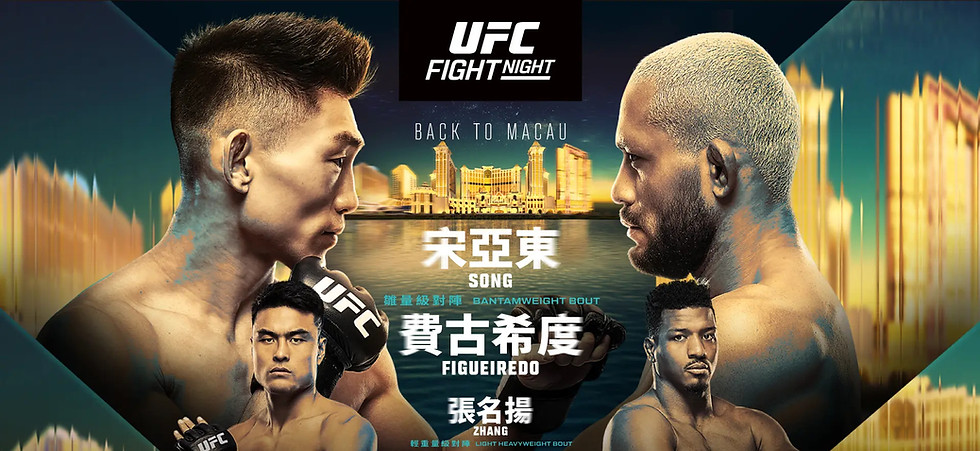
2. Song Yadong (-600) vs. Deiveson Figueiredo (+440)
-
The Blueprint: The Parlay Liability Anchor
-
Final Splits:
-
Yadong: 65% Handle / 84% Bets
-
Figueiredo: 35% Handle / 16% Bets
-
The Reality: Song Yadong represents a classic regional public anchor. The house permitted an incredibly high volume of public parlay tickets (84%) to flow through Yadong, but unlike the Pavlovich line, the actual cash handle stayed firmly elevated at 65%.
It looks like the betting companies didn’t try to stop people from betting on the favorite. Instead, they were perfectly fine taking a massive risk on the local star, even though almost everyone was betting on him. This suggests that the casino's private data models are confident standing against the public on this fight. It sets up Yadong to be the ultimate weekend parlay-killer if the veteran former champion, Figueiredo, can prove the hype made his opponent's price too expensive.
3. Zhang Mingyang (-245) vs. Alonzo Menifield (+200)
-
The Blueprint: The Extreme Liability Trap
-
Final Splits:
-
Mingyang: 86% Handle / 86% Bets
-
Menifield: 14% Handle / 14% Bets
-
The Reality: This is arguably the most glaring architectural anomaly on the entire card. From Day 1 to the final report, public money completely swamped Zhang Mingyang, culminating in an entirely symmetrical, lopsided 86% of all tickets and 86% of all cash. In standard risk-mitigation bookmaking, a persistent 86% cash liability on a moderate favorite should force the line to rocket toward -320 or higher to invite buyback on the underdog.
It appears the house stubbornly kept Mingyang incredibly cheap, allowing the line to settle at just -245. Seemingly to be aggressively welcoming public money on the local prospect. This passive hold strongly implies that the bookmakers' internal probability engines project Alonzo Menifield as holding a profound stylistic or technical edge that the casual market is entirely ignoring. The house has chosen to take a massive, unhedged stand here.
III. THE SHARP REALIGNMENTS: WHERE METRIC GAPS FORCED RETREAT
When sharp syndicates detect an outright pricing error, they strike with enough concentrated volume to force the house out of its original position. We track this by looking for significant positive differentials between cash percentage and ticket percentage.
1. Kangjie Zhu (-115) vs. Rodrigo Vera (-105)
-
The Market Dynamic: Total Structural Reversal
-
Final Splits:
-
Zhu: 52% Handle / 44% Bets
-
Vera: 48% Handle / 56% Bets
-
The Reality: On Day 1, Zhu opened as a clear +136 underdog but immediately saw a massive surge of sharp capital (+37% handle-to-bet differential). This concentrated professional wealth completely broke the opening line, forcing the house into a total tactical retreat across pick'em territory.
As the final market matured on Friday night, Zhu settled as a -115 favorite, retaining a positive cash-to-bet ratio (52% handle on 44% tickets). This indicates that professionals steadily drove this train all week, forcing the public to eventually buy back on Vera as a cheap -105 underdog on high ticket volume (56%). Seemingly, the professional stamp remains firmly on the Zhu side of the counter.
2. Meng Ding (-122) vs. Jose Henrique (+102)
-
The Market Dynamic: Late-Week Public Overrun
-
Final Splits:
-
Ding: 68% Handle / 69% Bets
-
Henrique: 32% Handle / 31% Bets
-
The Reality: Early in the week, Henrique carried the profile of a sharp underdog target with a strong positive money differential. However, as the week matured, the sheer mass of the casual market completely overran the board. Public money poured in on Meng Ding, perfectly aligning his final splits at 68% handle and 69% tickets, pushing him to a -122 favorite.
It appears the house allowed the public to completely dictate the price without aggressively scaling up Ding's cost to protect themselves, it appears the house is highly content booking a nearly 70% liability on the favorite. This late public inflation has recreated a highly profitable, widened buyback window on Jose Henrique at an attractive +102 dog price.
IV. THE REVERSAL ILLUSION: LOMA LOOKBOONMEE VS. JAQUELINE AMORIM
One of the most fascinating micro-trends on this card belongs to the strawweight matchup between Jaqueline Amorim and Loma Lookboonmee.
Final Splits:
-
Jaqueline Amorim (-130): 42% Handle / 53% Bets
-
Loma Lookboonmee (+110): 58% Handle / 47% Bets
Market Journey:
[Day 1] Lookboonmee -125 (Sharp Target) --->
[Day 3] Flat Pick'em (-110) --->
[Final] Lookboonmee +110 / Amorim -130
The Reality: Early lookahead data showed Lookboonmee opening as a -125 favorite with sharp backing, while the public targeted Amorim. Mid-week, public ticket accumulation stubbornly persisted, grinding the fight down to a flat pick'em.
Looking at the final mature splits, an absolute masterclass in market creation is revealed. The casual betting public pushed Amorim to a -130 favorite on a 53% ticket clip. However, look at the money handle: Lookboonmee is holding 58% of the total cash on just 47% of the bets.
This means that while casual bettors drove the nominal price movement based on parlay volume, the house happily used public enthusiasm to inflate Amorim, intentionally creating a "cheap" price on Lookboonmee to lure and keep the sharps on her. The massive, professional straight-cash wagers silently re-entered the market on Lookboonmee the second she flipped to a plus-money underdog (+110) for those tracking the actual cash flow.
V. THE PROSCHMOBETS SUMMARY: SHARP OR NOT MATURITY MATRIX
To properly navigate the board this weekend, we must separate the emotional public narratives from structural reality.
ZHANG VS. MENIFIELD
-
Current Price: Zhang -245
-
The Market Reality: House intentionally left Zhang cheap despite an 86% cash liability. A blatant stand by the casino.
-
Sharp Status: NOT SHARP (Public Trap)
-
The Play: Alonzo Menifield (+200)
AMORIM VS. LOOKBOONMEE
-
Current Price: Amorim -130
-
The Market Reality: Ticket count inflated the favorite, but the absolute cash majority (58%) is sitting on the underdog.
-
Sharp Status: SHARP (Value Target)
-
The Play: Loma Lookboonmee (+110)
ZHU VS. VERA
-
Current Price: Zhu -115
-
The Market Reality: Professionals systematically destroyed the opening +136 line and held the cash edge all week.
-
Sharp Status: SHARP (Market Driver)
-
The Play: Kangjie Zhu (-115)
DING VS. HENRIQUE
-
Current Price: Ding -122
-
The Market Reality: Casual accumulation overrun. House is comfortable holding a lopsided liability on the favorite.
-
Sharp Status: NOT SHARP (Public Overrun)
-
The Play: Jose Henrique (+102)
PAVLOVICH VS. TEIXEIRA
-
Current Price: Pavlovich -625
-
The Market Reality: The house successfully balanced its straight-cash book while locking casuals into bad parlay value.
-
Sharp Status: NEUTRAL (Market Locked)
-
The Play: PASS (No Value)
The Final Takeaway
In the end, a weekend of fights like this reminds us that betting companies never set up numbers to lose money. They build them to take cash from regular fans who guess with their hearts and put it right into the casino's bank account.
When regular fans and the betting companies completely disagree on a fight—like with Zhang Mingyang and Song Yadong—the casino's smart math models almost never lose. Be smart with your money, don't buy into the local hype, and trust where the big cash is going instead of just counting how many regular people are picking a fighter.

May 16, 2026 / ProSchmoStaff
Sharp or Not: The Final Vegas 117 Market Blueprint
Every sports betting board is basically a massive psychological mind game. The people making the odds aren't just predicting who wins a fight; they are engineering lines to mess with your emotions, protect the casino's cash, and trick the everyday crowd into making bad bets. Rookie analysts panic whenever they see a line jump during the week. They scream that "the pros are sweating!" when, in reality, it's just the natural flow of money balancing out.
But if you zoom out and track how these lines move from the second they drop until the final bell—while matching up the actual cash flowing in against smart computer fight models—the chaos disappears. What looks like a random mess of numbers is actually a finely-tuned matrix designed to ensure the casino wins.
Here is the ultimate, unfiltered breakdown of where the real, smart money is hiding this weekend and exactly how the house plans to take everyone else’s.
1. The Underdog Resistance: Fading the Public Chalk
The most compelling macro-signal on this entire card features large-scale, sophisticated capital actively betting against the public crowd on key preliminary and main card matchups.
Tuco Tokkos (+145) vs. Ivan Erslan
-
The Splits: Handle: 74% | Bets: 51%
-
Market Shift: Line tightened from an open of +160 down to +145.
-
The Reality: This appears to be the biggest underdog money trap on the entire card. The pro bettor syndicates locked onto Tokkos early and refused to back down. Instead of panicking, the casino blinked, "adjusted the line" slightly, and held its ground at +145 to "bait" regular fans into betting on the favorite. But here’s the "kicker": public data models show a massive +27.2% analytical edge on Tokkos. This is the ultimate "sharp money" bet where the math and the pros are perfectly aligned.
Melquizael Costa (+124) vs. Arnold Allen
-
The Splits: Handle: 59% (Peak 68%) | Bets: 50%
-
Market Shift: Line moved 18 cents toward Costa since the opening line (+140 to +124).
-
The Reality: Seemingly the house opened Arnold Allen far too wide on Day 1, triggering an immediate avalanche of professional money on Costa. Realizing they were dangerously off-balance, the bookies chopped the price all week to make the favorite look cheap. While casual public straight bets trickled onto Allen late, the smart money remained firmly on the Brazilian. Algorithmic modeling strongly backs the sharps here, projecting Costa with a 64% win probability and a massive +23.7% edge against the market price. Will the SHARP's be right on this one?
Timothy Cuamba (+130) vs. Benardo Sopaj
-
The Splits: Handle: 81% (Settled at 76%) | Bets: 65%
-
Market Shift: Classic Reverse Line Movement. Sopaj dropped from -175 to -155.
-
The Reality: This is a textbook example of a quiet sharp signal on a mid-card fight the casual public will completely ignore. While recreational players wrote consistent retail tickets on the favorite, high-roller straight bettors slammed Cuamba at plus money.The house dropped the line defensively, fully aware that they are exposed if the dog barks. Will the public backing Sopaj win out, or will the sharp money on Cuamba take the prize?
2. The Decoy Lines: Bookmakers vs. The Syndicates
Nikolay Veretennikov (+100) vs. Khaos Williams
-
The Splits: Handle: 65% | Bets: 50%
-
Market Shift: Line completely frozen at +105/-125 all week.
-
The Reality: This matchup represents a fascinating game of chicken. Veretennikov commanded a massive 65% of the heavy dollar volume, yet the house flatly refused to adjust the price. In sports betting, when a book willingly absorbs sharp action without moving the number, it means the house likes its hand. Algorithmic models firmly side with the bookies here, giving Williams a 58.2% win probability and citing a massive 216-point opponent-quality gap. Seemingly, the house designed a pristine trap line, happily taking sharp money on Veretennikov because their internal metrics tell them Williams controls the cage.
Doo Ho Choi (+136) vs. Daniel Santos
-
The Splits: Handle: 51% | Bets: 41%
-
Market Shift: Santos line steamed from -130 up to -162 despite Choi carrying the dollar handle.
-
The Reality: Early sharp groups identified an immediate mathematical mispricing on "The Korean Superboy" at the opening bell, hammering Choi's line. The house, anticipating heavy retail public money on Santos closer to fight time, aggressively steamed the favorite to -162 anyway. Interestingly, fight models show this match as a pure 50/50 coin flip. Perhaps the sharps see a technical or stylistic variable the computer models completely miss, making Santos highly overvalued at the counter.
Shauna Bannon (+235) vs. Nicolle Caliari
-
The Splits: Handle: 29% | Bets: 25%
-
Market Shift: Caliari steamed from -180 all the way to -290.
-
The Reality: On paper, the public completely buried Bannon under an avalanche of parlay volume. However, the data reveals that the market price has vastly overextended. Caliari has a mere two fights under the UFC banner, yet the house is pricing her like an absolute certainty. Predictive models show an incredible anomaly here, rating Bannon as a 58.1% favorite with a card-high +32.5% raw edge. It appears the house artificially inflated Caliari’s price to exploit public hype, creating a massive, hidden mathematical oasis on the underdog for anyone brave enough to take it.
3. The Structural Pools & Short-Notice Shuffles
The double-listings across VSiN sheets this week caused massive confusion for casual bloggers, but they reveal how corporate books partition risk during late-notice card changes.
The Tommy Gantt / Artur Minev Puzzle
-
The Reality: Behind-the-scenes drama and last-minute fight changes forced the casino to keep two separate betting pools open at the same time, instead of wiping out the old bets when opponents switched. Regular fans completely ignored the chaos and blindly threw Gantt onto almost every parlay bet they made, giving him a massive 80% to 88% of all the money wagered. It looks like the casino left these betting lines wide open on purpose. They basically turned Gantt into a giant money vacuum to suck up cash from casual bettors. That way, if a huge, short-notice upset happens, the casino walks away with a massive payday.
Modestas Bukauskas vs. Christian Edwards
-
The Splits: Handle: 84% | Bets: 92%
-
Market Shift: Line locked in at an inflated -325 to -340 favorite price.
-
The Reality: Edwards stepped in for Bellato on ultra-short notice. In the original pool against Bellato, the smart money actually leaned away from Bukauskas (holding only 37% handle). But once the unranked promotional newcomer Edwards was introduced, the house plastered Bukauskas as a massive premium favorite. The public treated it as an absolute certainty, dumping 92% of their tickets into it. It appears the house utilized this inflated chalk line to generate a massive cash cushion, completely insulating their ledger from any sharp liabilities lingering in the original matchmaking pools.
The Master Blueprint: How the House Wins
When we review the board as a cohesive whole, it appears the oddsmakers structured this card with a deliberate, dual-layered trap:
-
The Public Bait: Heavy, over-taxed chalk like Malcolm Wellmaker (-278), Alice Ardelean (-205), and the late-notice Modestas Bukauskas (-325) line were engineered specifically to absorb public parlay volume at a steep premium.
-
The Sharp Buffers: The house allowed distinct value pockets on underdogs like Tuco Tokkos and Melquizael Costa to take on professional capital, but offset that liability by completely freezing lines like Veretennikov (+100) where their internal data strongly favors the favorite.
By giving the sharps their desired value angles in select spots and feeding the public their favorite heavy favorites in others, the house constructed an ironclad ledger. If the chalk cruises, the house wins on the massive juice and inflated premiums charged all week. If the live underdogs cash, the public parlay ecosystem is completely obliterated. The sharps might win their isolated battles, and the public might cash a few obvious tickets, but the architecture of the board guarantees that the house always wins.
POWERED by VSiN
Nicolle Caliari → Handle 71% | Bets 75%
Shauna Bannon → Handle 29% | Bets 25%
Luis Gurule → Handle 42% | Bets 47%
Daniel Barez → Handle 58% | Bets 53%
Polyana Viana → Handle 28% | Bets 27%
Alice Ardelean → Handle 72% | Bets 73%
Andre Petroski → Handle 53% | Bets 59%
Cody Brundage → Handle 47% | Bets 41%
Jacqueline Cavalcanti → Handle 70% | Bets 78%
Ketlen Vieira → Handle 30% | Bets 22%
Tommy Gantt → Handle 80% | Bets 74%
Trey Ogden → Handle 20% | Bets 26%
Artur Minev → Handle 12% | Bets 11%
Tommy Gantt → Handle 88% | Bets 89%
Ivan Erslan → Handle 33% | Bets 51%
Tuco Tokkos → Handle 67% | Bets 49%
Nikolay Veretennikov → Handle 65% | Bets 50%
Khaos Williams → Handle 35% | Bets 50%
Khaos Williams → Handle 59% | Bets 54%
Nikolay Veretennikov → Handle 41% | Bets 46%
Rodolfo Bellato → Handle 63% | Bets 37%
Modestas Bukauskas → Handle 37% | Bets 63%
Benardo Sopaj → Handle 76% | Bets 65%
Timothy Cuamba → Handle 24% | Bets 35%
Christian Edwards → Handle 16% | Bets 8%
Modestas Bukauskas → Handle 84% | Bets 92%
Juan Diaz → Handle 13% | Bets 10%
Malcolm Wellmaker → Handle 87% | Bets 90%
Daniel Santos → Handle 49% | Bets 59%
Doo Ho Choi → Handle 51% | Bets 41%
Melquizael Costa → Handle 59% | Bets 50%
Arnold Allen → Handle 41% | Bets 50%


May 9, 2026 / ProSchmoStaff
SHARP OR NOT: UFC 328 FINAL MARKET RECONNAISSANCE
The House Architecture: Intent vs. Outcome
After tracking the line movement all week, it appears UFC 328 was structured to capitalize on public sentiment. The books leveraged anchoring—using high-profile favorites to entice casual fans into heavy parlay action. By the weekend, the house shifted from passive observation to active risk management. They aggressively steamed the favorites to limit their liability, effectively 'finding the floor' on payouts. This ensured that even if sharp money landed on a live underdog, the casino’s exposure remained protected. The trap was set, and the house covered its tracks.
The Main Event: The Strickland Value Trap
Sean Strickland +380 to +390
65% (handle) 36% (parlays)
Khamzat Chimaev-500
35% (handle) 64% (parlays)
Market Insight: Seemingly, the house overextended the Chimaev price early, hitting a ceiling at -575. The late "walk back" to -500 is a classic Reverse Line Movement (RLM) indicator. While the public continues to hammer Chimaev in parlay slips, the house has acknowledged the professional appetite for Strickland at +400 levels. It appears the "fair price" was found late, and the house is now bracing for a heavy sharp payout if Strickland’s cardio dictates the later rounds.
The "Sharp" Stand: Jeremy Stephens (+330)
The Divergence: Stephens carries 58% of the money on just 20% of the tickets.
This is the boldest move we’ve seen from the books. Even though Stephens offers triple the payout value, the house shifted the odds heavily toward Green. They are completely ignoring the "sharp" pro bettors who are backing Stephens. Evidently, the bookmakers are confident that the massive wave of regular fans betting on Green is actually the winning side of the coin.
Late Signal Adjustments: The "Tightening" Lines
-
Joaquin Buckley (+150): This is a confirmed sharp signal. The line tightened from +170 to +150 with a 66% handle concentration. It appears the house respected the professional entry here and lowered the payout accordingly to discourage further sharp exposure.
-
William Gomis (+140): The odds just shifted 40 cents toward Gomis, but it wasn't because of a wave of bets. Instead, the house moved the line themselves. It looks like they realized their opening number was a mistake and scrambled to fix it before the pros could strike. They’re bracing for an ambush—but was the original number actually wrong, or are they overreacting?
-
Jim Miller (+225): We see another case of textbook RLM. Despite 84% of bets favoring Jared Gordon, the line drifted toward Miller in the final 24 hours. It appears the house is "following the money" on the bigger professional tickets rather than the count of recreational slips.
-
Pat Sabatini (-162): A rare spot of alignment. With 81% of the handle and 78% of the slips, it appears this is a "true" market price where both the house and the public are comfortable.
The "Dead Signal" Warning
It is worth noting that in fights like Amosov-Alvarez and Dawson-Rebecki, there is almost no market divergence. In these spots, the house has achieved "Perfect Balance". This is often where the house makes its most consistent profit, as there is no sharp side to pay out—only the "vig" to collect from a split public; in other words: This is usually where the casino makes its most reliable money. Since there isn't a group of "smart" pro bettors for them to worry about paying, the casino just sits back and collects a small fee from both sides of the regular crowd.
Final Conclusion: The final look of the card shows four of the five strongest market signals are sharps fading public chalk. The house has two distinct strategies in play: they are running from the sharps on Buckley and Gomis, but they are standing their ground and "daring" the sharps to beat them on Stephens and Strickland. In other words, the casino is selective about its battles. They are cutting their losses where they feel vulnerable, but they are confident enough in their own math to risk a massive payout if the underdogs pull off the upset.
The lines have been drawn. The house is ready.
Powered by VSiN
Jose Ochoa -180
85% (handle) 81% (parlays)
Clayton Carpenter +150
15% (handle) 19% (parlays)
Djorden Santos +550
24% (handle) 8% (parlays)
Baisangur Susurkaev -800
76% (handle) 92% (parlays)
William Gomis +136
19% (handle) 22% (parlays)
Pat Sabatini -162
81% (handle) 78% (parlays)
Marco Tulio Silva -185
22% (handle) 46% (parlays)
Roman Kopylov +154
78% (handle) 54% (parlays)
Jared Gordon -258
71% (handle) 84% (parlays)
Jim Miller +210
29% (handle) 16% (parlays)
Mateusz Rebecki +120
46% (handle) 43% (parlays)
Grant Dawson -142
54% (handle) 57% (parlays)
Yaroslav Amosov -185
52% (handle) 58% (parlays)
Joel Alvarez +154
48% (handle) 42% (parlays)
Ozzy Diaz +675
14% (handle) 6% (parlays)
Ateba Gautier -1050
86% (handle) 94% (parlays)
Jeremy Stephens +330
58% (handle) 20% (parlays)
King Green -425
42% (handle) 80% (parlays)
Joaquin Buckley +145
67% (handle) 50% (parlays)
Sean Brady -175
33% (handle) 50% (parlays)
Waldo Cortes-Acosta +110
43% (handle) 50% (parlays)
Alexander Volkov -130
57% (handle) 50% (parlays)
Bogdan Guskov -125
78% (handle) 79% (parlays)
Jan Blachowicz +105
22% (handle) 21% (parlays)
Tatsuro Taira -155
47% (handle) 45% (parlays)
Joshua Van +130
53% (handle) 55% (parlays)
Sean Strickland +380
65% (handle) 36% (parlays)
Khamzat Chimaev -500
35% (handle) 64% (parlays)

May 1, 2026 / ProSchmoStaff
Sharp or Not: The UFC Perth Betting Intelligence Report
This final synthesis examines the movement of capital versus the volume of public sentiment for the UFC Perth card. By analyzing the trajectory of the lines from opening to the final bell, we can begin to see where the house/casino has laid its traps and where the professional syndicates have staged their attacks. In betting, "sharp" money is defined by high-dollar volume (handle) coming from a small percentage of tickets (bets/parlays). When the line moves in the opposite direction of public consensus, we may find the Reverse Line Movement (RLM)—the purest indicator of where the "pro" money lives.
I. The Syndicate Special: Pericic vs. Gaziev
It appears the Pericic/Gaziev flip is a tactical diversion. The house/casino may potentially use shadow-volume to create a fake "sharp" narrative on Gaziev, likely to mask an injury or to protect against a total "clean sweep" by the public.
The Reality: The house is "positioned to win" not because they think Gaziev is better, but because they have engineered a board where the public's money on Pericic is offset by the public's vulnerability on Malkoun, Prates, and Erceg. They can flip Percici to dog odds and Ghaziev to favorite to deter the public from further action or total cash-out on Pericic; new bets on Ghaziev; whereas SHARPS would bet more on Ghaziev or avoid the fight all together.
The Final Word: In a card where everyone is looking at the "sharp" move on Gaziev, the real sharpness is recognizing that the line movement is a defensive wall built by the house. If Gaziev is truly compromised, the 78% handle on Pericic represents the only real market truth left. The house is betting that their "shadow" Gaziev move will scare you off the right side. Don't let it.
II. The Textbook Sharp Plays
Two fights stand out as the clearest examples of professional bettors identifying a mathematical edge and forcing the bookmakers to adjust.
1. Tim Elliott (+145) vs. Steve Erceg (-175)
This has been the highest-conviction play of the week.
-
The Movement: Elliott opened at +260. The sharps hammered this price so relentlessly that the line crashed over 100 points.
-
The Final Data: Even with a shortened price, Elliott holds 46% of the money on only 28% of the tickets.
-
The Verdict: It appears the house "missed" on the opening line, and the sharps didn't let them off the hook. This is a classic case of professional money dictating the market value, leaving the public to play "catch up" on an Erceg favorite that the pros clearly view as overvalued, but is it?
2. Robert Bryczek (+160) vs. Cam Rowston (-192)
-
The Movement: Bryczek saw a massive handle surge mid-week. The gap between his money and his bets grew from 14 points to 22 points by fight day.
-
The Final Data: Bryczek is carrying 46% of the handle on a mere 24% of the tickets.
-
The Verdict: This is a "clean" sharp signal. While the public is comfortably parlaying Rowston (76% of tickets), the "whale" bettors are taking the plus-money on the underdog. Should you? Cam Rowston does possess the superior reach and volume to stifle power. Something to think about.
III. The House Stand: Salkilld vs. Dariush
The matchup between Quillan Salkilld (-380) and Beneil Dariush (+300) represents a standoff between the sharps and the casino.
-
The Data: Throughout the week, Dariush was identified as a "pure" sharp play, often holding 50% of the money on less than 15% of the bets.
-
The Stand: Interestingly, the final splits show the handle on Dariush dropped to 37% as the public piled into Salkilld (83% of tickets).
-
The Verdict: It appears the bookmakers are comfortable holding their position here. Despite early sharp interest in the Dariush "dog" price, the sheer volume of public parlay money on Salkilld has allowed the house to keep the line inflated. This is a "House vs. Sharps" battle where the house is betting that the public's favorite will cover their liability. Are you rooting on Beneil Dariush as they are?
IV. Fading Signals and Public Traps
Several early-week signals have "died" or reversed, suggesting that the initial movement was either a "head fake" or has been swallowed by public volume.
-
JDM vs. Carlos Prates: While JDM is the hometown hero, Prates is carrying 68% of the handle and 60% of the bets. This is not a sharp play; it is a consensus play. The market is unified on Prates, making it a high-liability fight for the house. Will the public and the SHARPS win on Prates?
-
Louie Sutherland (+190): Despite a 14-point gap between money and bets, the line moved against Sutherland. It appears the books are more afraid of the public's love for Tai Tuivasa than they are of the sharp money on Sutherland.
-
Wes Schultz (+130): This signal has completely inverted. Schultz now has only 12% of the money on 31% of the bets. The "smart money" has clearly migrated to Ben Johnston (-155), who sits with a commanding 88% handle. Interesting development.
Final Synthesis: The House Perspective
Looking at the board, it appears the "Sharp Report" for UFC Perth is defined by three distinct strategies:
-
The Information Play: The late-minute flip on Shamil Gaziev/Pericic.
-
The Value Play: The week-long grind on Tim Elliott.
-
The Contrarian Play: The quiet, heavy-hitter support for Robert Bryczek.
Ultimately, the books have positioned themselves to win big if Steve Erceg and Brando Pericic manage to pull through, as those are the two spots where the "smartest" money in the room has placed its heaviest bets. As always, the house has designed these lines to ensure that while individual bettors may win, the collective "public" usually pays for the privilege of the show.
Powered by VSiN
Kody Steele | -148 |
58% Handle | 57% Bets
Dom Mar Fan | +124 |
42% Handle | 43% Bets
Themba Gorimbo | +185 |
28% Handle | 18% Bets
Jonathan Micallef | -225 |
72% Handle | 82% Bets
Wes Schultz | +130 |
12% Handle | 31% Bets
Ben Johnston | -155 |
88% Handle | 69% Bets
Vince Morales | +120 |
42% Handle | 34% Bets
Colby Thicknesse | -142 |
58% Handle | 66% Bets
Gerald Meerschaert | +900 |
16% Handle | 18% Bets
Jacob Malkoun | -1,600 |
84% Handle | 82% Bets
Kevin Christian | +190 |
38% Handle | 34% Bets
Junior Tafa | -230 |
62% Handle | 66% Bets
Robert Bryczek | +160 |
46% Handle | 24% Bets
Cam Rowston | -192 |
54% Handle | 76% Bets
Louie Sutherland | +190 |
44% Handle | 30% Bets
Tai Tuivasa | -230 |
56% Handle | 70% Bets
Brando Pericic | +100 |
78% Handle | 76% Bets
Shamil Gaziev | -120 |
22% Handle | 24% Bets
Ollie Schmid | +500 |
35% Handle | 13% Bets
Marwan Rahiki | -700 |
65% Handle | 87% Bets
Steve Erceg | -175 |
54% Handle | 72% Bets
Tim Elliott | +145 |
46% Handle | 28% Bets
Quillan Salkilld | -380 |
63% Handle | 83% Bets
Beneil Dariush | +300 |
37% Handle | 17% Bets
Carlos Prates | -110 |
68% Handle | 60% Bets
Jack Della Maddalena | -110 |
32% Handle | 40% Bets

April 25, 2026 / ProSchmoStaff
Sharp or Not: The UFC Vegas 116 Betting Autopsy
Understanding why a line moves is often more important than the movement itself. This fight card appears to be out together by the house (casino) where they didn't just build a card; they designed a psychological gauntlet. While early-week reports often chase shadows (random betting), today's final betting splits appear to reveal the true intent: a weekend where the house invited the public to feel smart, only to trap them in the "sharp" overcorrection.
The Main Event: Sterling vs. Zalal
Zalal -135 | Sterling +114
Handle (cash) 54% Sterling
Bets (parlays) 49% Sterling
It appears the bookies set a trap on Day 1 by inflating Youssef Zalal to a peak of -162. This appears to be a "price discovery" move. They wanted to see if the public would swallow the hype of the favorite or if the professional money would defend the former champion, Aljamain Sterling. It is clear that the sharps bit hard at +136, causing a massive 26-point reversal over the week. However, notice the final landing spot: Sterling at +114. Even with the "sharp" money pouring in for three days, the handle (cash) only sits at 54%. This suggests that while the "pros" took the early value, the house is perfectly comfortable keeping Sterling as a plus-money underdog. It appears their intent was likely to bait enough Aljo money to balance the books, leaving the casino in a "green-either-way" position while effectively capping the liability on the favorite.
The RLM Masterclass: Buchecha vs. Spann
Buchecha -155 | Spann +130
Handle 54% Buchecha
Bets 37% Buchecha
This is the cleanest Reverse Line Movement (RLM) on the card. For four days, the public loaded up on Ryan Spann (63% of tickets), expecting the underdog to pull the upset. In a standard market, Spann’s price would drop. Instead, Buchecha moved from -125 to -155.
It appears the house has a very specific "sharp" read on Buchecha. By ignoring the high volume of Spann bets and making Buchecha more expensive, the bookies are signaling they have no fear of the Spann tickets. They are protecting themselves against large, institutional-sized bets on the grappling specialist. In this scenario, the house is actively rooting against the public.
The Public Darlings: Dumont and Hernandez
Norma Dumont (-198)
71% Bets / 63% Handle
Alexander Hernandez (-122)
78% Bets / 82% Handle
These two fights represent the "Public Steam."
-
Dumont: The line reached -238 before "smart money" on Joselyne Edwards (+164) finally forced a buy-back. It appears the house allowed the public to drive this price up as high as possible to make the Edwards underdog price irresistible to sharps, effectively using the public to "fund" the sharp side of the book.
-
Hernandez: Despite a staggering 82% handle, the line actually crashed from a peak of -162 down to -122. This is a massive red flag. When 80% of the money is on one guy and his price gets cheaper, it appears the house is begging you to take Hernandez. Historically, when the house makes a popular favorite this "affordable," it’s because they expect the underdog, Rafa Garcia, to win.
The "Sharp" Illusion: Martinetti vs. Grant
Davey Grant -135 | Martinetti +114
Handle 65% Martinetti | Bets 56% Martinetti
Earlier in the week, there were mixed reports regarding Adrian Luna Martinetti. The handle was high, but the line moved away from him. Today’s data clarifies the mystery. While Martinetti has the majority of the money (65%), the line moved from -122 toward Davey Grant. This is a classic "Liability Move." It appears the house isn't seeing "sharp" money on Martinetti; they are seeing "uneducated" high-volume money on a hyped debutant. By moving the line toward the veteran Grant, the bookies are balancing their risk by making the favorite more attractive to the actual professionals.
The Conclusion: Who is the House Rooting For?
The design of UFC Vegas 116 is a tale of two halves:
-
The Traps: In fights like Hernandez vs. Garcia and Polastri vs. Alencar, the house is handing the public the favorites on a silver platter. Should we beware of gifts from the casino?
-
The Shields: In Buchecha vs. Spann, it appears the house is standing firm against the public.
Ultimately, it appears the most professional money this weekend is sitting on Aljamain Sterling (at the correction), Rafa Garcia (due to the Hernandez line collapse), and Marcus Buchecha (the RLM king).
As always, remember: the lines aren't moving to tell you who will win; they are moving to ensure the house never loses.
Powered by VSiN
Julia Polastri: -258
Handle 57% | Bets 74%
Talita Alencar: +210 |
Handle 43% | Bets 26%
Victor Valenzuela: -130
Handle 70% | Bets 63%
Max Griffin: +110
Handle 30% | Bets 37%
Lucas Brennan: +370
Handle 20% | Bets 11%
Francis Marshall: -485
Handle 80% | Bets 89%
Cody Durden: +455
Handle 21% | Bets 8%
Jafel Filho: -625
Handle 79% | Bets 92%
Michelle Montague: -440
Handle 91% | Bets 91%
Mayra Bueno Silva: +340
Handle 9% | Bets 9%
Sedriques Dumas: +160
Handle 33% | Bets 27%
Jackson McVey: -192
Handle 67% | Bets 73%
Eric McConico: +260
Handle 41% | Bets 24%
Rodolfo Vieira: -325
Handle 59% | Bets 76%
Ryan Spann: +130
Handle 46% | Bets 63%
Marcus Buchecha: -155
Handle 54% | Bets 37%
Raoni Barcelos: +160
Handle 55% | Bets 42%
Montel Jackson: -192
Handle 45% | Bets 58%
Adrian Luna Martinetti: +114
Handle 65% | Bets 56%
Davey Grant: -135
Handle 35% | Bets 44%
Alexander Hernandez: -122
Handle 82% | Bets 78%
Rafa Garcia: +102
Handle 18% | Bets 22%
Joselyne Edwards: +164
Handle 37% | Bets 29%
Norma Dumont: -198
Handle 63% | Bets 71%
Youssef Zalal: -135
Handle 46% | Bets 51%
Aljamain Sterling: +114
Handle 54% | Bets 49%

April 18, 2026 / ProSchmoStaff
Sharp or Not: The UFC Winnipeg Market Analysis
This report synthesizes several days of betting volatility, distribution of betting slips/parlays, and handle percentages to determine where the "Sharp" money truly landed and whether the house, the sharps or public holds the edge for UFC Winnipeg: Burns vs. Malott.
I. The Sharp Signals: Where the Pros Planted Their Feet
The most significant market movements appear to be driven by early respect for underdogs and technical corrections by the sportsbooks.
1. The Gilbert Burns "Collapse"
-
The Movement: Opened +330 Final +225.
-
The Narrative: This was the most aggressive drift on the card. Sharps attacked the +330 opening, forcing a massive 105-point adjustment.
-
The Reality: Despite the public holding 66% of the betting slips/parlays on the favorite (Malott), the handle finished nearly dead even (51% Malott / 49% Burns). This confirms that while casual bettors flooded the books with slips for the young Canadian, high-limit sharp accounts were heavily leveraged on the veteran Burns.
2. Gauge Young: The "Surrender" Move
-
The Movement: Steady -130 Final -166.
-
The Narrative: The books "absorbed pressure all week and then surrendered" once the limits were raised toward fight day.
-
The Reality: This is a classic "pro-side" move. The books held at -130 for three days despite a lopsided handle. Once the professional money flooded in, it forced the books to jump nearly 30 points overnight. This indicates high-conviction money coming from a small number of respected accounts rather than a mass of public betting slips/parlays.
3. JJ Aldrich: The Handle/Slip Gap
-
The Movement: Opened +154 Final +150.
-
The Reality: Early signals showed 81% of the money on only 20% of the betting slips/parlays. While the line movement was shallow (only 4 points), the final split of 26% handle on 19% of slips indicates that the early "sharp" signal was diluted by public action as the week progressed.
II. Reverse Line Movement (RLM) & Market Fakes
The Raposo/Nascimento Dynamic
-
The Movement: Raposo +200 Final +154.
-
The Reality: This is the textbook definition of Reverse Line Movement. Nascimento (the favorite) holds 68% of the betting slips/parlays and 60% of the money, yet the line moved toward the underdog Raposo. This occurs when sportsbooks receive action from "known winners" on the dog side and adjust the price regardless of the volume of public parlays on the favorite.
The Jourdain "Quiet Landslide"
-
The Movement: Jourdain -170 Final -135.
-
The Reality: Jourdain is a heavy public favorite (84% handle / 78% of betting slips/parlays), yet the price for Phillips moved from +142 to +114. This indicates that sharps were quietly picking off the Phillips price all week, forcing the books to make Jourdain a much cheaper favorite to entice public money back onto the other side.
III. Final Market Health & Split Distribution
(Final Odds, Handle, Betting Slips, Market Conclusion)
Gilbert Burns +225
49% (handle) 34% (slips/parlays) Sharp Side (Value grab)
Gauge Young -166
46% (handle) 55% (slips/parlays) Sharp Steam (Late conviction)
J. Jasudavicius -325
82% (handle) 88% (slips/parlays) Public Chalk (Square money)
Mitch Raposo +154
40% (handle) 32% (slips/parlays) RLM Signal (Pro Dog)
Charles Jourdain -135
84% (handle) 78% (slips/parlays) Public Trap (Fade bait)
IV. Final Verdict: Designed for Who?
The UFC Winnipeg card is shaping up to be a classic "trap" event—crafted to bleed the public while the sharps pick apart the remaining value. When analyzing the betting splits, the core question remains: will the heavy public action get crushed, or can casual bettors actually pull off a win against the grain? History suggests a grim outlook; the house usually has it figured out, and as they say, the bookie always wins.
-
The Public Trap: Fighters like Jasmine Jasudavicius (-325) and Charles Jourdain (-135) are carrying massive volume in betting slips/parlays (88% and 78% respectively). The books have padded these lines to account for the heavy parlay volume, making the underdog side mathematically more attractive to professionals, which should distract PRO's from betting the favorites as heavy as they usually would.
-
The Sharp Edge: The pros found their "home" in the veteran underdogs (Burns, Raposo) and the late steam on Gauge Young.
The Conclusion:
Last week (as detailed in the report below), the Sharps and the House dominated the weekend. This time, however, it appears the House has structured these lines specifically to cap the Sharps' from winning "too much." Across North America (USA/Canada), a massive betting public is heavily backing the hometown favorites on this card. While a favorite-sweep would result in a massive public payout, current market movement suggests the House is aligned with the veterans and underdogs (Aldrich, Herbert, Jasudavicius, Burns) —which appears is where the respected money is currently parked.

April 11, 2026 / ProSchmoStaff
This week in Miami, we saw a tug-of-war between professional syndicates and public sentiment. Some "sharp" signals turned out to be early-week bluffs, while others held firm, forcing bookmakers to rethink their entire strategy.
Here is the definitive breakdown of why the lines moved and who is actually holding the "smart" side:
1. The "True Sharp" Moves: Sustained Conviction
These are the fights where professional money entered early and stayed late, forcing the books to move the price and keep it there.
-
Cub Swanson (-118): This was the sharpest play of the week. Swanson opened as a +110 underdog on Day 1. By the final bell, he closed as a -118 favorite. Even though the public jumped on late (68% of bets), the sharps dictated this move from the start, taking the value early and leaving the books with a massive Swanson liability.
-
Dominick Reyes (-162): Early in the week, there was a fake-out on Johnny Walker. However, by Day 4, the "Walker Signal" died. Professional money poured into Reyes, steaming him from -130 to -162. The 58% handle on 60% of bets shows a rare moment where the public and sharps aligned to bury an overvalued underdog.
-
Francisco Prado (+145): This line saw a massive "collapse." Radtke opened at -245 and was hammered down to -175. While the final splits show Radtke carrying 70% of the late handle, the 70-point move on the opening line confirms that sharps identified Radtke as a massive favorite-trap early in the week.
2. The "Bait & Switch": Market Reversals
In these matchups, early "sharp" signals evaporated as the week progressed, proving that sometimes early money is just loud money, not smart money.
-
Josh Hokit (-112): This was the most "schizophrenic" line on the card. For five days, Hokit held nearly 70% of the money as a dog. But as the fight approached, the market balanced out perfectly. The books moved the line to bait the public, and it worked—closing at a virtual pick’em with a 51/49% split. The early sharp "war" ended in a draw.
-
Jiri Prochazka (-108): For seven days, we watched Jiri drift from -142 toward a pick'em. It looked like a "pro-Ulberg" masterclass. However, look at the final numbers: Jiri closed with 72% of the handle on 69% of the bets. The "sharps" who were fading Jiri early were overwhelmed by a massive late-week surge of pro-Jiri capital.
3. The "Public Chalk": Sharp Aversion
These are the fights where the professionals stayed away, leaving the public to inflate the lines to dangerous levels.
-
Kevin Gastelum (-270): This is the definition of "Public Chalk." Gastelum moved from -230 to -270 with 83% of the bets. This isn't sharp movement; it's parlay-filler. The bookies "need" Luque (+220) because the public is entirely exposed on Gastelum.
-
Tatiana Suarez (-148): Despite being one of the most dominant fighters on the card, the sharps didn't see value in the opening price. The 83% handle and 81% bets indicate a "Public Steam" situation. The line is holding not because of sharp respect, but because the public refuse to bet against her.
4. The "Hidden Split": Sharp vs. Public
-
Randy Brown (+102) vs. Kevin Holland (-122): This was the "Two Different Fights" matchup. Holland holds the majority of tickets (61%), but the money handle is dead even. This tells us the "Average Joe" is betting Holland, while the larger, professional-sized wagers are sitting on Randy Brown as a plus-money underdog.
Final Market Verdict:
-
The Sharp Side: Cub Swanson, Francisco Prado, Randy Brown.
-
The Public Side: Kevin Gastelum, Tatiana Suarez, Aaron Pico.
-
The Market Mirage: The early-week Josh Hokit "Sharp Signal" that vanished by fight night.
Bottom Line:
Watch the Swanson and Reyes results. Those lines were moved by conviction, not just volume. If they win, the "sharps" owned this weekend. If they fail, the books just had a very profitable Saturday.